Inherited disorders
Validated molecular tests for breed-relevant hereditary diseases, including clear, carrier and affected genotypes where the inheritance mechanism is known.
Canine genetics, health, selection and population research brought together in one international framework. The Institute supports evidence-based breeding through verified DNA data, veterinary screening, responsible reproductive classifications and long-term scientific monitoring.
The Institute develops and coordinates WDF projects in canine genetics, hereditary disease prevention, population health, DNA traceability and responsible breeding. Its role is to connect scientific evidence with real breeding decisions, without confusing genetic risk with a veterinary diagnosis and without applying the same test protocol to every breed.
Modern canine selection requires a combination of biological identity, pedigree continuity, clinical and phenotypic screening, validated genetic tests, reproductive history, offspring monitoring and population-level analysis. The objective is progressive risk reduction while preserving genetic diversity and the functional, behavioural and biological integrity of each breed.
This approach is already reflected in WDF project documentation: monogenic disorders, complex or polygenic conditions, penetrance, family history and population diversity must be interpreted together. A negative DNA result excludes only the variants actually tested; it is not a universal certificate of health.

The following areas describe the scientific scope of the project. Exact tests and thresholds must always remain breed-specific and be interpreted by competent veterinary or laboratory professionals.
Validated molecular tests for breed-relevant hereditary diseases, including clear, carrier and affected genotypes where the inheritance mechanism is known.
Hip and elbow dysplasia, patellar luxation, spinal and chondrodystrophy-related risks, developmental orthopaedic conditions and other phenotype-based assessments.
Breed-specific testing and clinical monitoring for degenerative, neuropathic or muscular disorders where validated diagnostic or genetic tools exist.
Progressive retinal disorders, inherited ocular abnormalities and hearing risks, with ophthalmic or BAER-type screening where appropriate.
Breed-relevant cardiac screening, thyroid evaluation and inherited metabolic disorders considered within integrated veterinary protocols.
Inherited bleeding disorders, blood-cell abnormalities and selected immune-mediated predispositions considered when validated tests or clinical screening protocols are available.
Breed-associated kidney and urinary disorders, including conditions with validated molecular markers or recognised familial patterns, monitored within veterinary screening programmes.
Respiratory function and inherited or conformation-related risk are assessed through appropriate clinical protocols, especially where breathing efficiency affects health and welfare.
Fertility, litter outcomes, inherited reproductive problems and neonatal information contribute to long-term evaluation of breeding lines and population health.
Hereditary follicular disorders, ichthyosis-type conditions, coat structure, hair length, colour dilution alopecia and related dermatological risks.
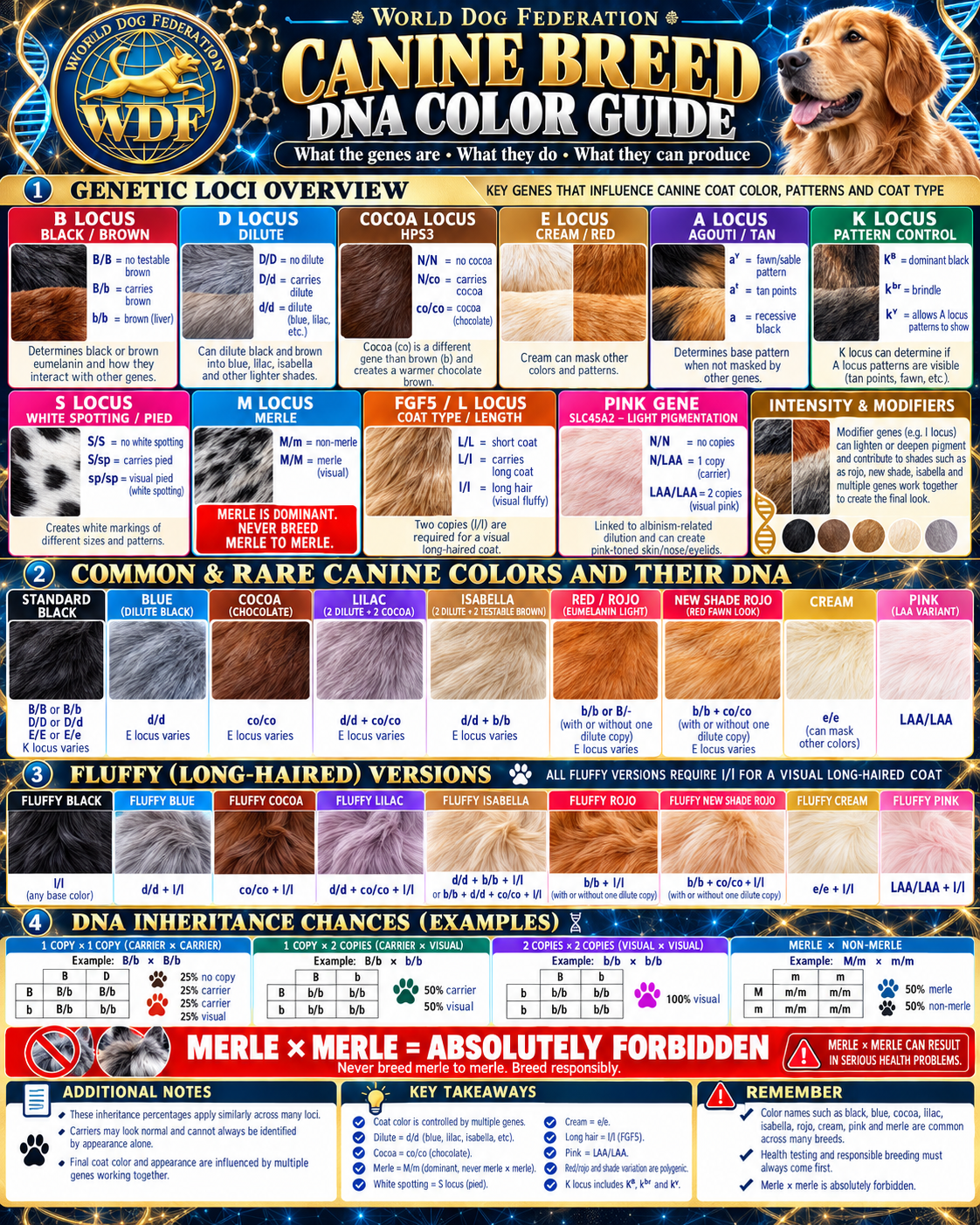
Genetic control of pigment and coat traits, including A, B, D, E, K, M, S and other relevant loci, with attention to combinations linked to health risk.
Parentage, DNA profiles, relatedness, inbreeding trends, carrier frequency, bottlenecks and sustainable mating strategies across generations.
The Institute's objective is not simply to catalogue diseases. It is to transform verified information into preventive action: identify real breed risks, choose appropriate tests, interpret them correctly, plan compatible matings and measure the results over successive generations.
Use breed history, veterinary evidence, pedigree information and population data to define what genuinely needs to be monitored.
Combine validated DNA tests with imaging, clinical examinations and phenotype-based assessments when required.
Reduce the probability of affected offspring without unnecessarily discarding valuable carriers or narrowing genetic diversity.
Health, fertility, structure, temperament and later-life information are used to verify whether selection decisions work in practice.
A.I.D.D. aggregates verified records so that policies can evolve according to measurable results rather than assumptions.
The Institute distinguishes between simple inheritance, complex risk and phenotype-based disease so that breeding decisions are proportionate and scientifically defensible.
Some conditions are strongly associated with a variant in a single gene. When the variant is validated for the relevant breed, DNA testing may identify genetically clear animals, carriers and affected genotypes.
Hip and elbow dysplasia are examples of conditions in which genes interact with growth, environment, nutrition and other factors. They cannot be managed through one DNA result alone and require structured phenotypic evaluation.
A detected variant does not always lead to the same clinical outcome in every dog. Age of onset, severity and expression may be modified by other genes and environmental factors.
For recessive diseases, clinically healthy carriers should not automatically be removed from the population. Controlled mating with genetically clear partners can reduce disease risk while protecting valuable diversity.

Skeletal disease is one of the areas where over-simplification is particularly dangerous. Hip dysplasia, elbow dysplasia and patellar luxation are important examples of conditions that are often assessed phenotypically and may be influenced by multiple biological and environmental factors. Breed-specific protocols may also include spinal disorders, chondrodystrophy and intervertebral disc disease risk, osteochondral development and other structural concerns.
Coat colour and hair structure are governed by multiple genetic loci. Modern laboratories can test many of these traits, including agouti, brown, dilution, extension, merle, piebald/white spotting, coat length, curl, furnishings, shedding and other breed-specific variants. These tests help predict inheritance and document breeding combinations.
Colour itself should not automatically be treated as disease. The health question arises when particular genetic combinations are associated with increased risk. Examples include colour dilution alopecia in susceptible dogs, pigment-associated congenital deafness in some populations, and the elevated risk associated with certain double-merle combinations. Hereditary follicular dysplasias and other congenital skin or hair disorders also form part of dermatogenetic research.
Aesthetic objectives must never override health, breed standard, population diversity or validated scientific evidence. Colour testing should be interpreted as one component of a broader reproductive protocol.
WDF relies on specialised veterinary genetics services for DNA analysis and has an agreement for genetic testing services with the LABOKLIN / LABOGEN laboratory network. Laboratory results are then connected to the dog’s identity and official record inside the WDF information system.
LABOGEN is the genetics department of LABOKLIN. Its public diagnostic portfolio includes hereditary disease testing, coat colour and coat structure, DNA profiles, identity and parentage analysis and breed-related genetic combinations. LABOKLIN states that EDTA blood can be used for molecular genetic testing and that buccal swabs are also accepted for many dog tests; DNA profiling and parentage work may use laboratory-defined sample protocols.
The Institute uses these laboratory capabilities as part of a broader WDF control system. A laboratory report is not interpreted in isolation: it is linked to microchip identity, pedigree, the specific test performed, sample provenance and the reproductive or clinical context.

These are internal WDF reproductive classifications. They are not veterinary diagnoses and must be assigned only after the applicable protocol, evidence and mating context have been evaluated.
Selected subjects meeting the highest level defined by the applicable WDF and national breed protocol, within the scope of the tests performed.
Subjects with limited or minor findings that may be considered only under documented mating restrictions and professional supervision.
Not for breeding: subjects excluded from reproduction because of serious transmissible risk, incompatibility or other disqualifying conditions.
A.I.D.D. — Artificial Intelligence Dog Database — is the WDF digital infrastructure that connects identity, pedigree, DNA deposits, health screening, reproduction, offspring and long-term population information. The scientific value comes from traceability and standardisation, not from the mere quantity of records.
Parents, ancestors, imported pedigrees and offspring remain connected when dogs move between countries.
Sample type, date, laboratory reference and documentary status remain linked to the individual dog.
Clinical, imaging and DNA results can be compared by breed, country, generation and time period.
Restrictions, compatibility, mating, litters and offspring outcomes are connected to the health record.
Carrier rates, affected cases and changes in known variants can be monitored across populations.
Pedigree depth and inbreeding indicators help identify bottlenecks and overuse of individual bloodlines.
Missing evidence, duplicate identifiers and unverified declarations can be separated from validated data.
Aggregated evidence supports review of breed priorities, screening coverage and the effect of breeding policies.
The Institute follows the principle that breed-specific protocols, laboratory validation and veterinary interpretation are essential. These external resources are useful reference points for the public explanation of the project.
Breed-specific screening programs covering orthopaedic, eye, cardiac, patellar, thyroid and DNA-based health evaluations.
View CHIC frameworkEducational resources on canine genetic testing, inherited disease risk, parentage and the limitations of interpreting genetic findings.
Canine DNA testingReference material for canine coat colour genetics, dilution, merle and other inherited pigmentation traits.
Coat colour geneticsVeterinary genetics services for hereditary disease testing, coat characteristics, identity, parentage and DNA profiling.
Genetics diagnostic spectrum